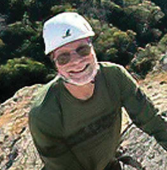
I had originally visited Bhutan in May of 2018 to run a marathon in my quest for my Seven Continents medal. Now I came back in May of 2026 to be with friends and to run a half marathon in Asia, my fifth continent for the half.
Bhutan is a beautiful country full of very friendly people. It’s like being in another world!
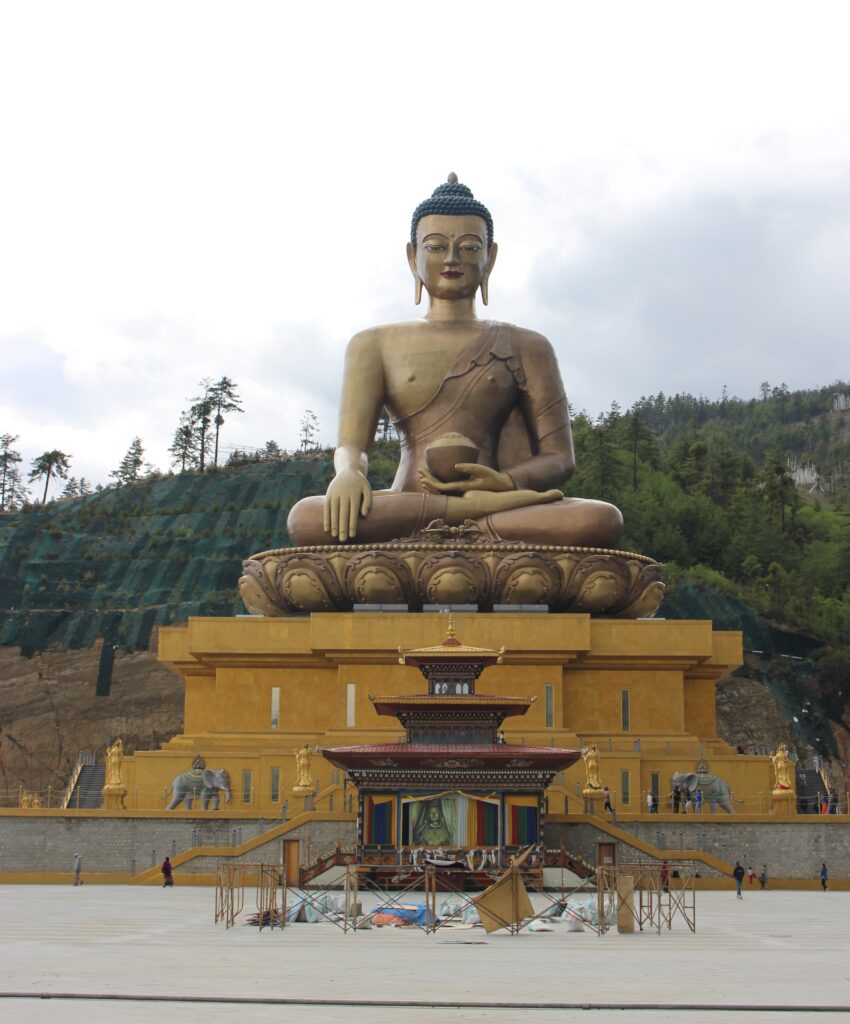

Two views of Great Buddha Dordenma, the gigantic Shakyamuni Buddha statue near the Bhutanese capitol of Thimphu. It celebrates the 60th anniversary of fourth king Jigme Singye Wangchuck The left photo was from May, 2018, the right from this trip, May, 2026.

Detail of one of the figures decorating the base of the Great Buddha

One of the gold statues around the Great Buddha, taken in 2018.

A top-of-the-hill view of the Punakha Dzong, the administrative center of Punakha District in Punakha, Bhutan. A dzong is a fortress monastery, Bhutan’s version of a medieval castle.

This is the famous Paro Taktsang, also known as the Taktsang Palphug Monastery and the Tiger’s Nest. It’s a sacred Vajrayana Himalayan Buddhist site in the Paro valley. We hiked to it, about six and a half hours and 12 miles round trip, including an hour for sightseeing. On this day, it was intermittently obscured by clouds.

The Takin is Bhutan’s national animal. It’s an ungulate similar to the muskox. We saw them at the Motithang Takin Preserve in Thimphu.
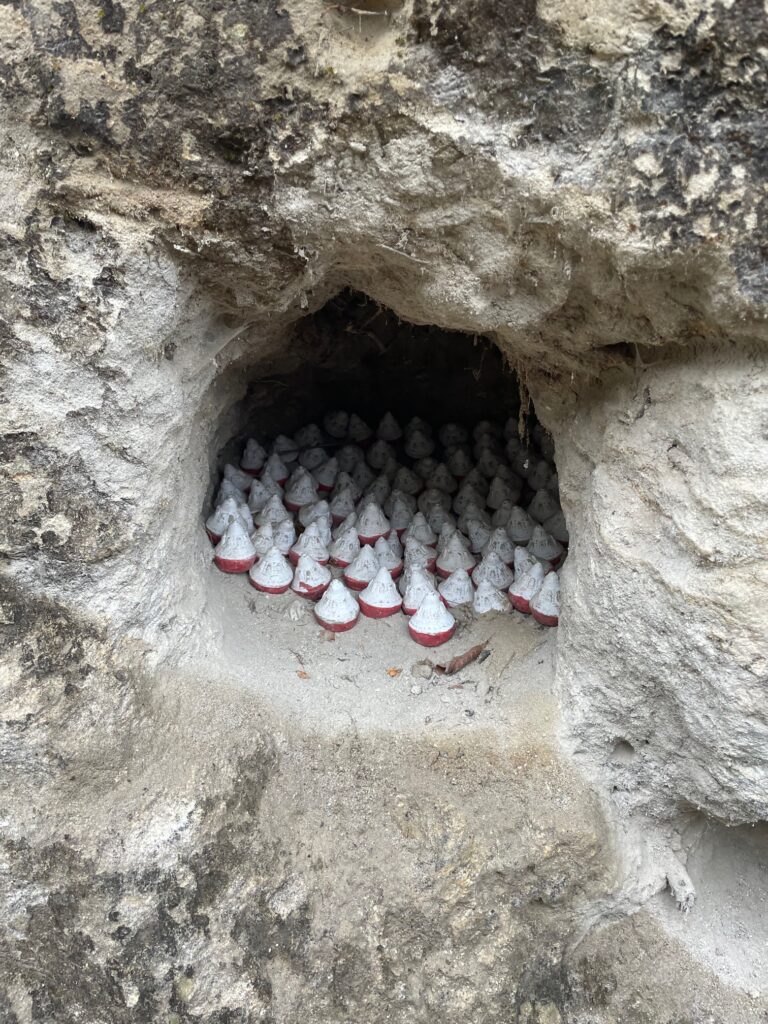
Miniature stupas seen on the hike to the Tiger’s Nest.
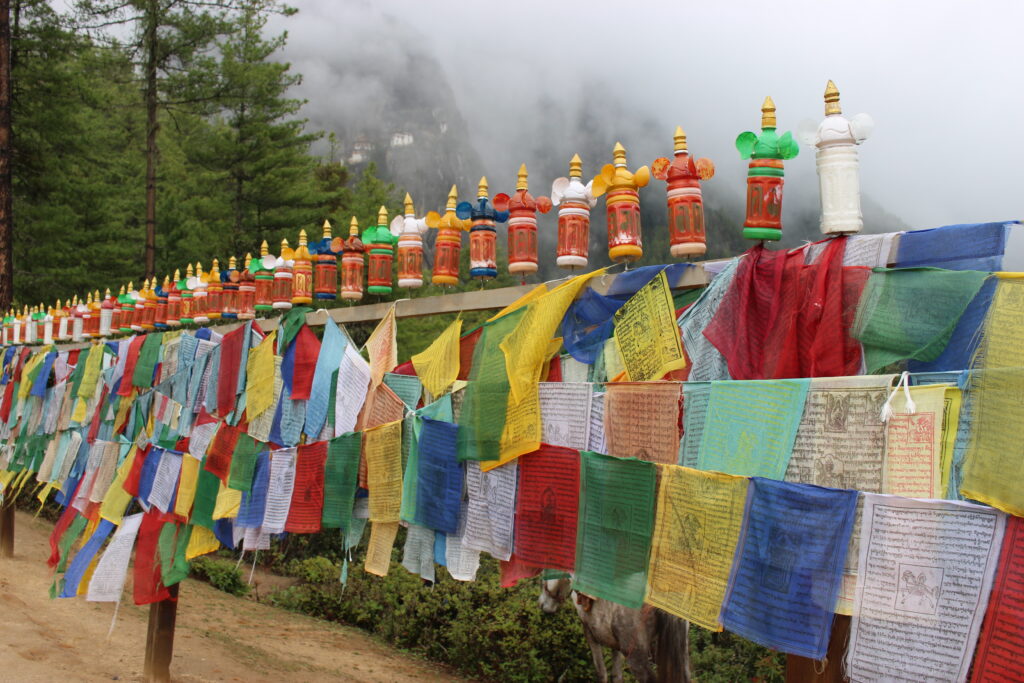
Prayer flags are an important part of their religious culture. The colors are significant: blue is for space or sky, white symbolizes air, red represents fire, green is for water, and yellow represents earth. This picture is from May, 2018.

“Community” dogs are very common in Bhutan. A notched ear signifies they’ve had their shots.

We visited a fabric store with some beautiful clothing and were able to see some of the weavers working. Some of the women in the group purchased stunning traditional dresses.

Being in a mountainous area, there were some very long suspension footbridges.